Where only one tree grows

Documenting the expansion of biomass plantations in protected habitats
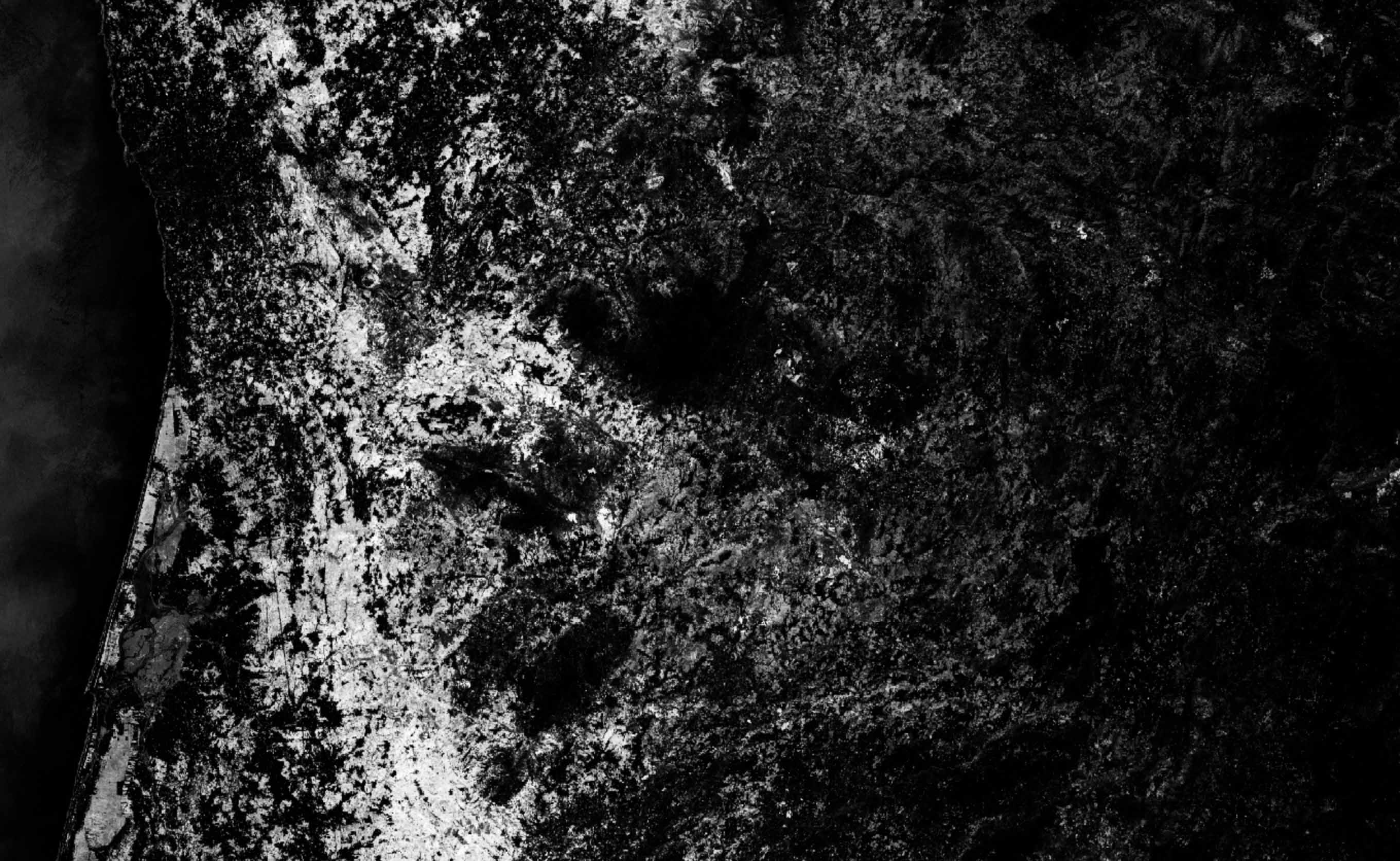
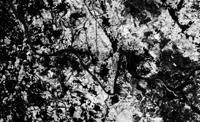
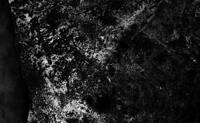
Processed Satellite Imagery. In white Eucalyptus plantations in Portugal are visible from space.


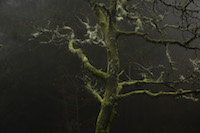
The Douro river and the sourrounding Eucalyptus Plantations highlighted as white areas in processed satellite imagery What looks like a close up of a tree trunk is the a view from space. The shape of the coastline near Porto forms a crust like a birch tree.

The two major problems our generation is facing right now are the climate crisis and the linked biodiversity crisis. The EU confronts these issues with two legal instruments, the renewable energy directive, and the biodiversity strategy. While the biodiversity strategy aims at preserving areas with high conservation values, the renewable energy directive includes bioenergy as a renewable resource for electricity generation, which could put additional pressure on our forests. According to European scientists, this could lead to an increase in carbon emissions and have serious impacts on ecosystems in and outside the EU [5].
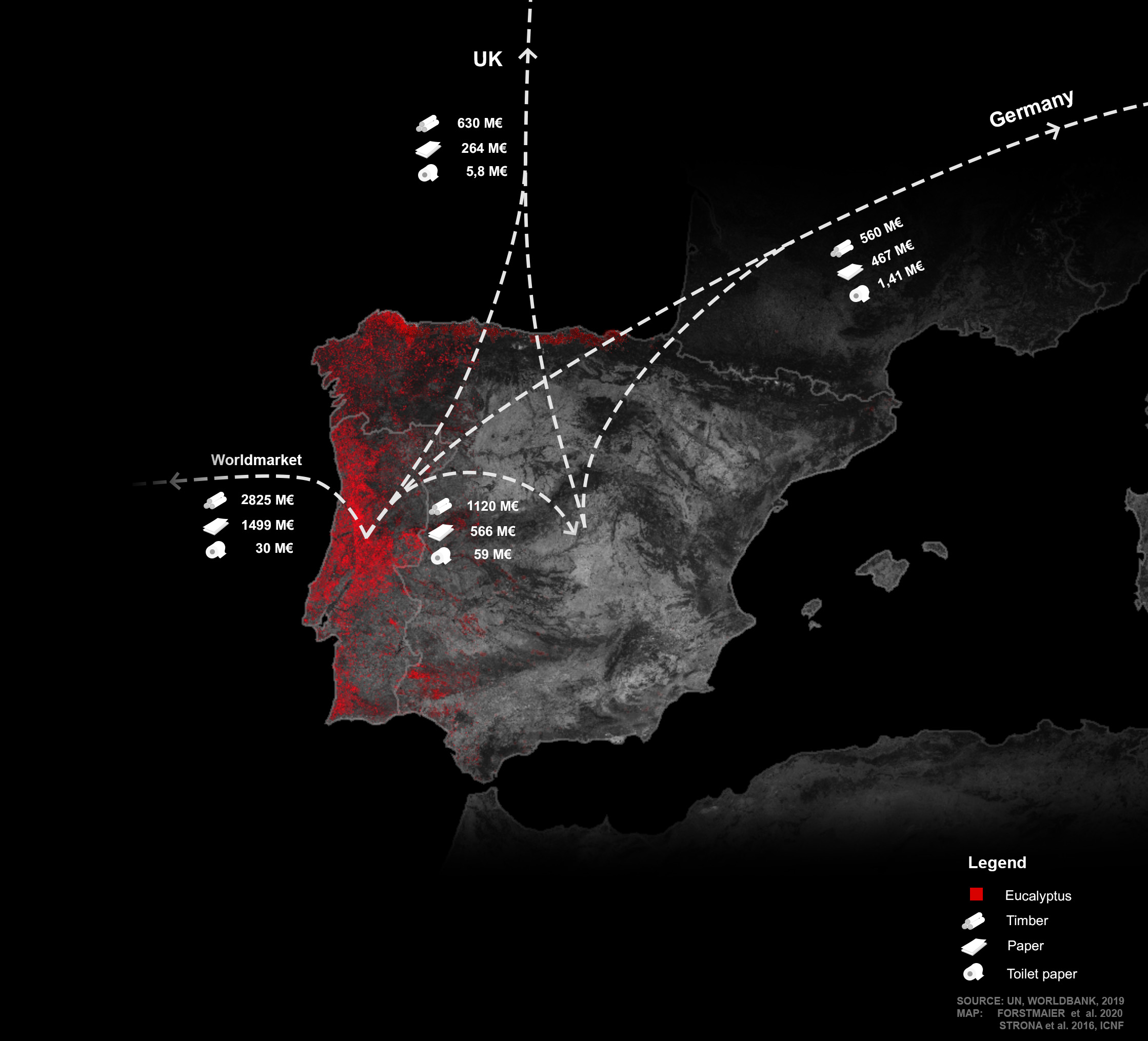
Eucalyptus timber is especially suitable for products like toilet paper and because of its fast growth it can sustain low prices even for disposable products. In the search for plant- based fuels, its fast growth makes it attractive for the bioenergy market. Derived products and raw material are exported from Portugal to many countries around the world including Spain, the UK, and Germany The map shows the trade fow in millions of Euros (M€) for the year 2019. Flows are for all species.


Read more about the findings


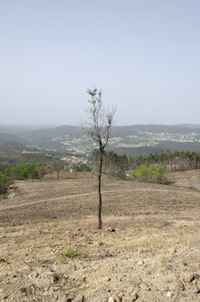
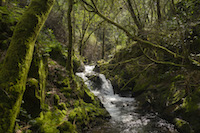
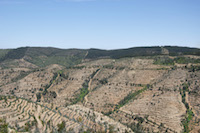
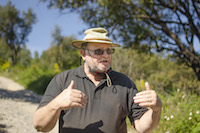
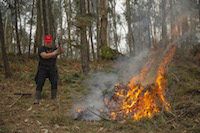
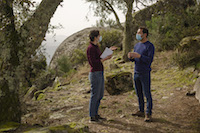
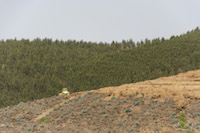
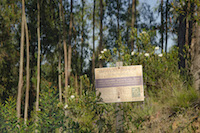
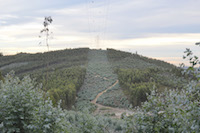
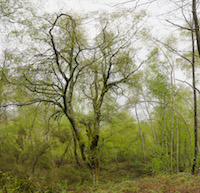
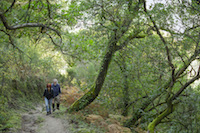
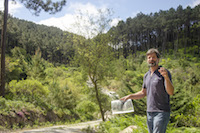
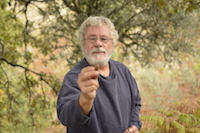
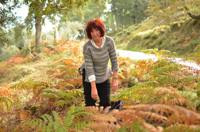
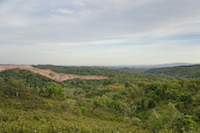
The picture shows a remaining native cork oak tree which was left standing during the clearcut of an Eucalyptus plantation Native vegetation along a stream in the Serras da Freita e Arada Natura 2000 site in the north of Portugal. Laurel forests are a rare forest type in Portugal and now only remain in humid valleys along waterlines. Natural forests can store more carbon than plantations in soil and degrading biomass while offering a habitat for many species. Industrial-scale Eucalyptus plantations cover the Monchique Natura 2000 site in the south of Portugal. The trees grow rapidly and can already be harvested after 7 to 15 years. Once cut, the tree regrows from its base and can be re-cut multiple times until the root systems become unproductive and are removed from the soil using heavy machinery. Justin Roborg-Söndergaard is working for a non-governmental environmental organization and supervises a reforestation project with native species in Monchique. He states that “Large-scale monoculture plantations cannot be in line with the conservation objectives of the site.” Aside from its fast growth, one of the reasons for landowners to plant Eucalyptus on their lands are the frequent occurrence of wildfres. On average every 10 to 20 years fres burn down vast areas in Portugal [2] , and those who plant native, slower growing species risk never harvesting anything.  Most of the fres are caused by human activity, for instance the burning of organic waste like branches and leaves. During dry conditions, these fres can get out of control and spread quickly. Along the Rio Vouga, a site protected for several habitat types, including cork oak and riparian elm forests [3], nowadays one mainly fnds Eucalyptus plantations down until the riverbank. Luis Sarabando works for a local forest association near the Rio Vouga and manages certifed forests in the area. Certifcation, in his opinion, rewards landowners who comply with legal requirements and provides a financial incentive to follow better practices. “Certification is a carrot, an incentive for the landowner to comply with the law”  The most common tree in certifed plantations in Portugal is the Eucalyptus [4]. The plantations are cleaned regularly to avoid the accumulation of dry litter from the trees and shrubs, which can catch fre easily. Nevertheless, even certifed plantations are usually managed in monoculture, and only small areas are reserved for conservation. Practices such as soil preparation and mobilization using heavy machinery and clear cutting are common, even in areas protected by the European Birds and Habitats Directive, as well as in certified plantations. Certified plantation in the Monchique Natura 2000 site. The native strawberry trees visible in the foreground have been cut to make room for a Eucalyptus plantation.  Valongo a site protected for habitats like Galicio-Portuguese oak woods is nowadays almost completely covered with Eucalyptus plantations. Once cut the Eucalyptus regrows. The young leaves look almost blue giving it its name “blue gum”.  20 000 years ago, before human intervention, large parts of the Iberian peninsula were covered with deciduous oak forests. Until the 19th century forests have been cleared gradually in order to be converted to pasture or agricultural land, as in other European countries. Only in the last century, it was begun to replant, now mostly in monoculture of conifers and recently with the evergreen Eucalyptus. This photo depicts a birch forest in the Alvão, in northern Portugal, which hosts a variety of different species, such as mushrooms that only grow near birch trees. Rare are the places where we can still observe strawberry trees of this size in Portugal, like this forest of ancient strawberry trees located in the National Park of Peneda-Gerês. Nuno Oliveira, technical director for the natural heritage of Parques de Sintra, shows an old eucalyptus plantation that the company reforested with native species in one of the forest areas under its management that are part of the Sintra Cascais Natural Park (Natura 2000 Network). All the forest assets managed by Parques de Sintra have management certified by the Forest Stewardship Council (FSC), and the removal of invasive species, such as acacias, is one of its main objectives. The recovery of the degraded natural heritage has always been the company's ambition and has not resulted from the forest certification process. Bernardo Markowsky and his wife, Teresa Markowsky, have founded a reforestation project. They are dedicated to restoring degraded ecosystems in the Serra da Freita and Arada. Ecosystem restoration work is arduous and depends on continuous funding. Teresa Markowsky is collecting seeds of native trees to create new trees in her own nursery. These will be planted in the coming years. Close to the Monchique Natura 2000 site some forests are still in a more natural state. Here so far only small parts of the forests have been converted into Eucalyptus plantations. Incentives for forest owners are necessary to keep up sustainable forestry practices, especially in protected sites and valuable ecosystems.


The series was published here:



Sources:


[1] Forstmaier, A.; Shekhar, A.; Chen, J. Mapping of Eucalyptus in Natura 2000 Areas Using Sentinel 2 Imagery and Artifcial Neural Networks. Remote Sens. 2020, 12, 2176. https://doi.org/10.3390/rs12142176
[2] Mateus P., Fernandes P.M. (2014) Forest Fires in Portugal: Dynamics, Causes and Policies. In: Reboredo F. (eds) Forest Context and Policies in Portugal. World Forests, vol 19. Springer, Cham. https://doi.org/10.1007/978-3-319-08455-8_4
[3] https://natura2000.eea.europa.eu
[4] https://pt.fsc.org/pt-pt/certifcao/certifcao-fsc-em-nmeros
[5] https://www.fern.org/publications-insight/how-bioenergy-harms-biodiversity-the-facts-2327/
[6] https://www.euractiv.com/section/energy-environment/news/leak-eu-taxonomy-draft-leaves-bioenergy-and-forestry-off-the-hook/
Previous picture Next picture Close gallery